Blog
Industrial Glass Quality Engineering | Defect Control, Process Stability & Risk Management in Food & Beverage Packaging
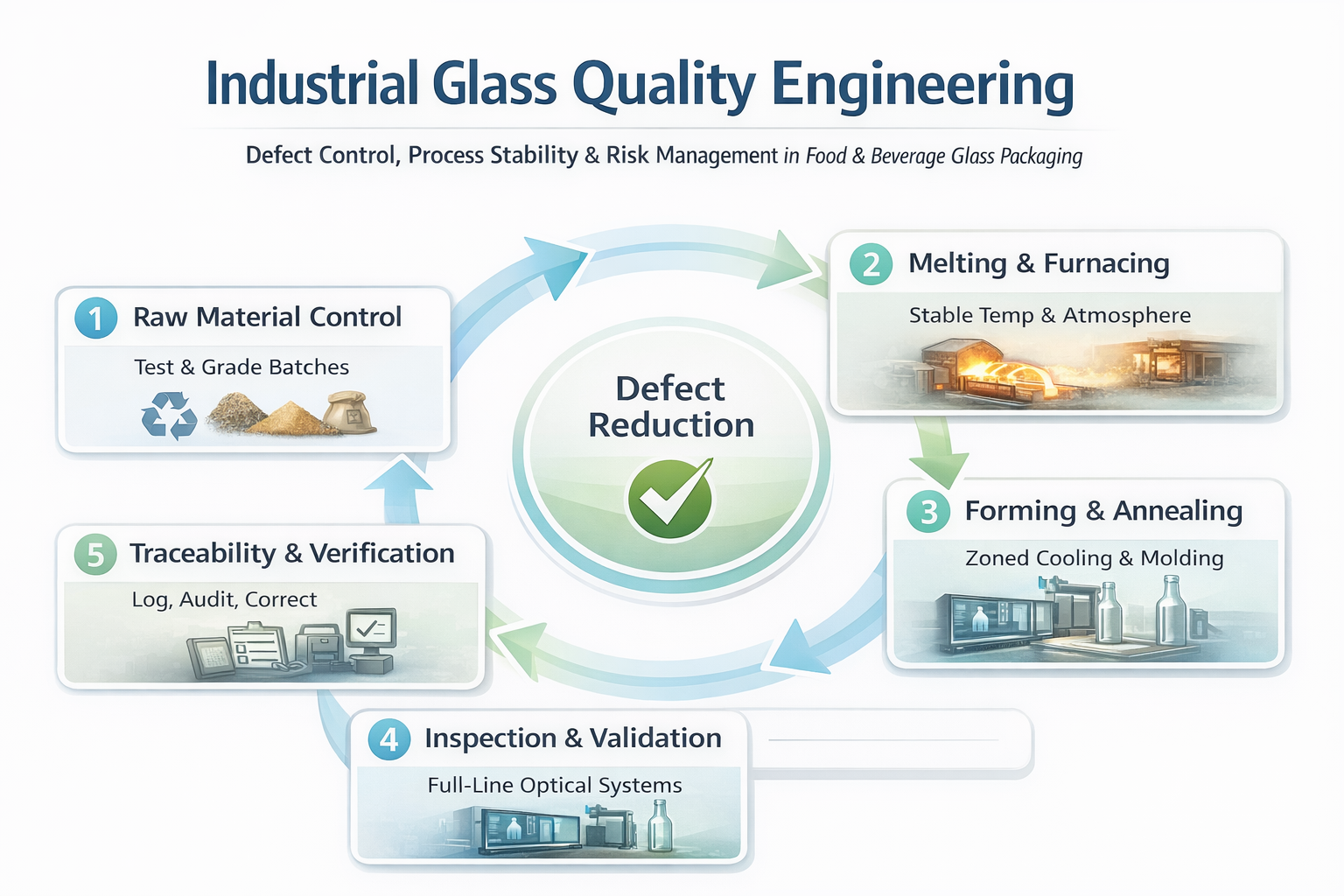
In industrial food and beverage packaging, glass quality is not judged by appearance alone — it is defined by process stability.
For wine producers, distilleries, beverage brands, and food manufacturers, packaging must withstand:
-
High-speed filling lines
-
Mechanical stress
-
Thermal shock
-
International transport
-
Long-term storage
Glass bottle quality engineering is the systematic control of material, melt, forming, annealing, and inspection variables to minimize defect probability and operational risk.
At COLORS GLASS, quality is not inspected into the product — it is engineered into the process.
1. Understanding Glass Bottle Defects in Industrial Context
Glass bottle defects fall into two principal categories:
1️⃣ Visible (Appearance) Defects
These affect shelf presentation and brand perception:
-
Bubbles
-
Surface scratches
-
Wrinkles and folds
-
Bottom deformation
-
Color variation
-
Mold seam irregularities
While cosmetic defects may not always compromise safety, they reduce perceived product value.
2️⃣ Intrinsic (Structural & Material) Defects
These are more critical:
-
Residual internal stress
-
Micro-cracks
-
Wall thickness variation
-
Chemical instability
-
Incomplete annealing
Intrinsic defects increase breakage probability during filling and transport.
2. Root Causes: Melt vs. Manufacturing Variables
Melt-Related Defects
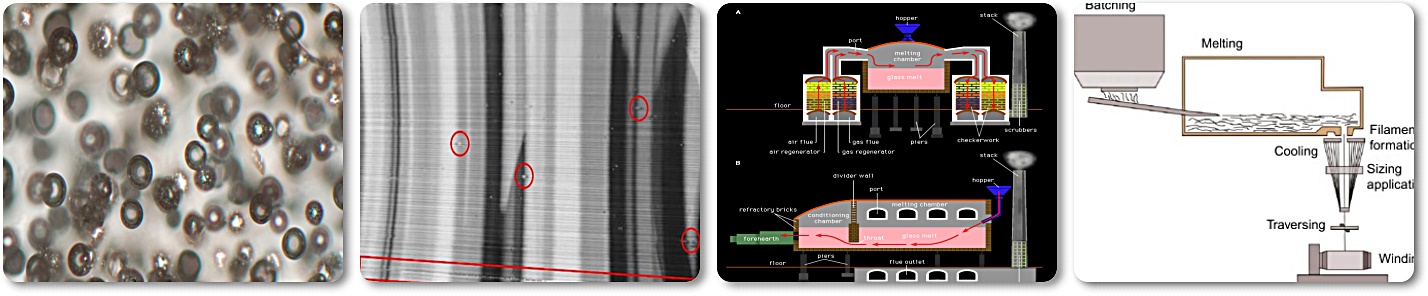
Originating during melting:
-
Gas bubbles (poor fining)
-
Stones (unmelted raw materials)
-
Striae (incomplete homogenization)
-
Devitrification
Root causes:
-
Raw material impurity
-
Furnace temperature fluctuation
-
Inconsistent oxidation-reduction balance
-
Refractory contamination
Process-Related Defects
Occurring during forming or handling:
-
Gob weight instability
-
Mold temperature imbalance
-
Improper lubrication
-
Inadequate annealing
-
Conveyor friction damage
These defects reflect process control maturity rather than material chemistry.
3. Defect vs. Cost Impact Engineering Model
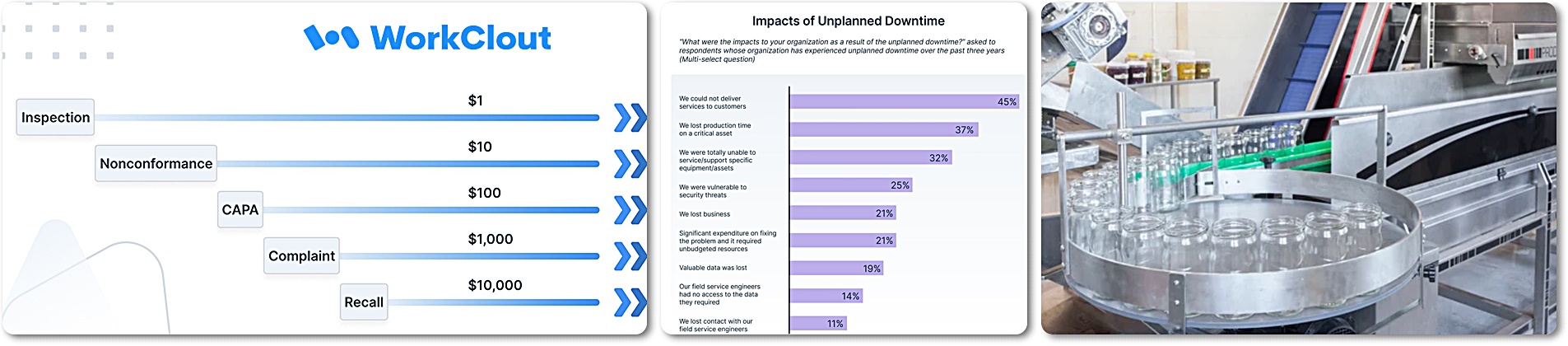
In industrial packaging, the real cost of a defect exceeds unit replacement value.
Relative Cost Impact Table
| Defect Type | Operational Consequence | Relative Cost Exposure |
|---|---|---|
| Cosmetic Scratch | Visual downgrade | Low |
| Bubbles | Sorting & scrap | Medium |
| Wall Thickness Variation | Structural weakness | High |
| Micro-Cracks | Filling line breakage | Very High |
| Contamination | Recall risk | Critical |
A single breakage event during filling may result in:
-
Line stoppage
-
Product disposal
-
Cleaning downtime
-
Production delay
Cost multipliers often exceed 10×–20× bottle price.
4. Process Control Level vs. Defect Probability

Defect probability is strongly correlated with process control maturity.
Process Control Maturity Model
| Level | Control Characteristics | Defect Probability | Risk Exposure |
|---|---|---|---|
| Reactive | Manual checks | 3–5% | High |
| Basic Monitoring | Periodic inspection | 1–3% | Moderate |
| Controlled Process | Stable parameters | 0.5–1% | Low |
| Engineering-Driven | Real-time monitoring & full inspection | <0.3% | Minimal |
Lower process variation leads to exponential reduction in defect probability.
5. Furnace & Thermal Stability Engineering
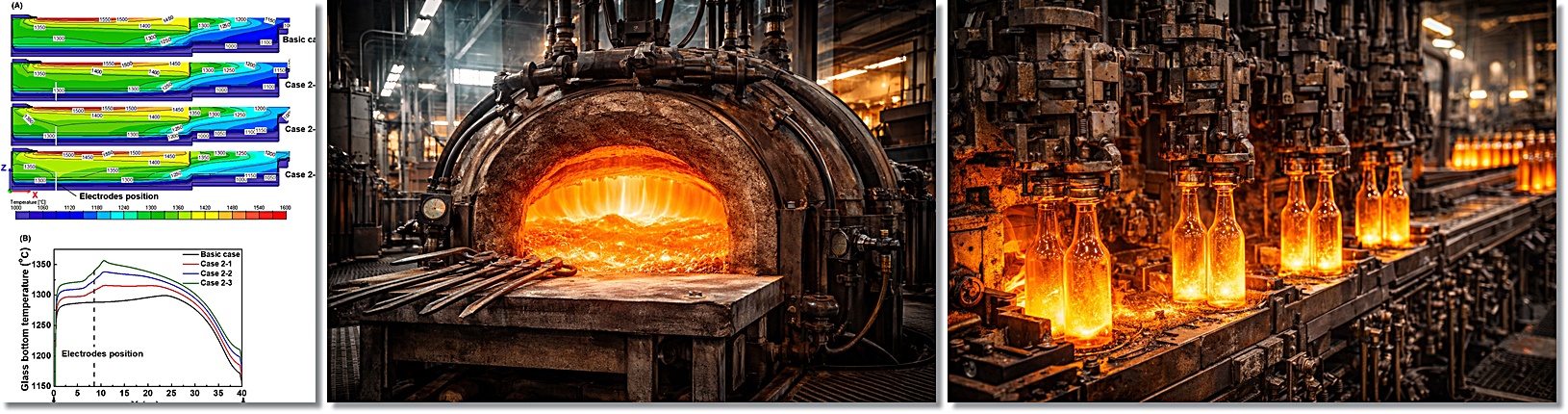
Critical parameters include:
-
Melt temperature uniformity
-
Refining time
-
Oxidation-reduction balance
-
Annealing curve precision
Zoned annealing and stress validation reduce residual internal stress — a key contributor to micro-cracks.
6. Inspection & Validation Systems
Quality control at COLORS GLASS integrates:
-
Automated optical inspection (neck, body, base)
-
Laser thickness measurement
-
Polariscopes for stress detection
-
Pressure and drop testing
-
Food-contact compliance verification
Traceability ensures rapid corrective action if deviation occurs.
7. Engineering-Driven Production at COLORS GLASS
COLORS GLASS integrates:
✔ Strict raw material screening
✔ Controlled batch formulation
✔ Stable furnace monitoring
✔ Precision gob delivery
✔ CNC-maintained molds
✔ Zoned annealing validation
✔ Full-line automated inspection
✔ Export-grade documentation
This multi-layered control architecture minimizes both visible and intrinsic defects.
8. Total Risk Management for Brand Owners
For wine and spirits producers, packaging reliability directly affects:
-
Production uptime
-
Product yield
-
Logistics stability
-
Brand integrity
Total Risk = Defect Probability × Cost Impact
By reducing both factors simultaneously, engineering-driven manufacturing protects operational performance.
Conclusion: Engineering Stability Over Price
In industrial glass packaging, the lowest price does not equal the lowest risk.
Defect-controlled production requires:
-
Process stability
-
Thermal precision
-
Surface durability
-
Automated inspection
-
Traceability discipline
At COLORS GLASS, we operate at the engineering-driven level — delivering consistent, export-grade quality for global wine and beverage packaging programs.
If required, our engineering team can provide:
-
Defect-risk analysis for your filling line
-
Mechanical performance validation
-
Pilot production verification
Industrial packaging is not about bottles.
It is about controlled systems.