Blog
What Determines Glass Bottle Surface Smoothness?Process Control Factors in Industrial Glass Bottle Manufacturing
Glass bottle surface smoothness is not determined by a single process parameter.
It is the cumulative result of thermal stability, material behavior, mold interaction, and mechanical synchronization across the entire manufacturing chain.
From molten glass preparation to final inspection, every stage influences structural integrity and surface quality. To understand how smooth glass surfaces are achieved — and why defects occur — it is necessary to examine the full industrial production system.
Industrial Glass Bottle Manufacturing Process Overview
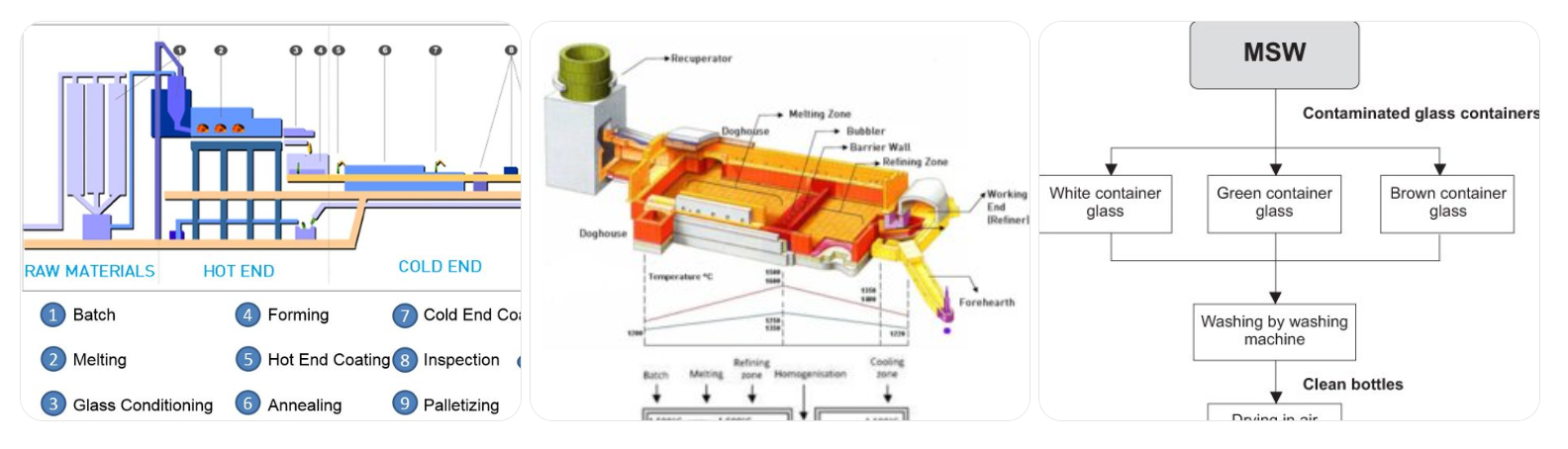
Modern glass container production is a continuous thermal-mechanical process consisting of:
-
Raw material melting in furnace
-
Glass conditioning and gob formation
-
Precision forming in IS machine
-
Controlled annealing
-
Automated optical inspection
Surface smoothness depends on stability across all stages, not just forming conditions.
IS Machine Forming Cycle and Material Distribution
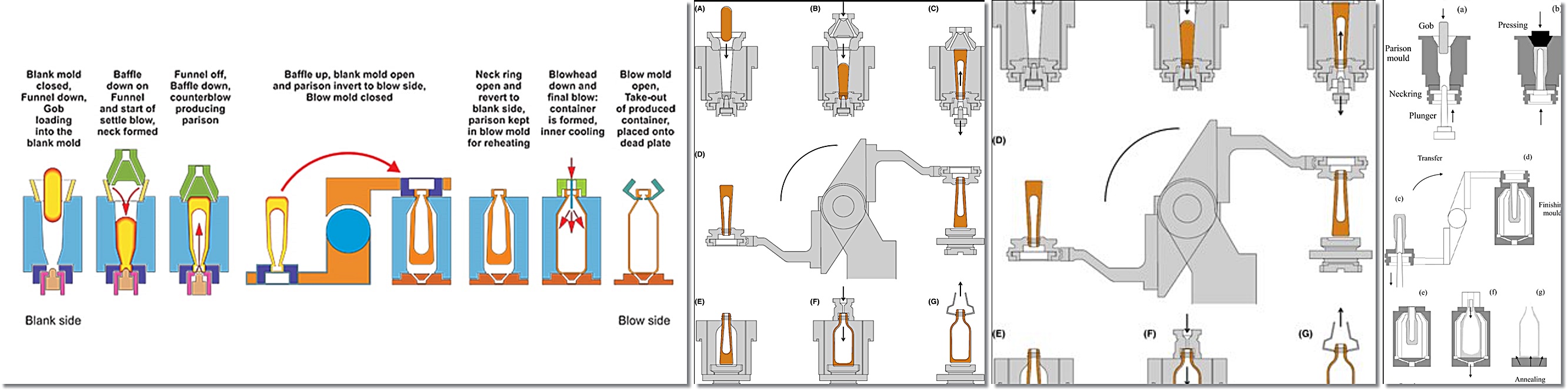
The IS (Individual Section) forming machine converts molten glass into finished containers through synchronized operations measured in milliseconds.
Cycle stages:
1 Gob delivery
2 Blank mold closure
3 Parison formation
4 Transfer to blow mold
5 Final expansion
6 Bottle release
Surface smoothness is strongly affected by:
-
gob temperature uniformity
-
mold closure timing
-
air pressure stability
-
expansion symmetry
Any deviation creates uneven material distribution and surface irregularities.
Glass Viscosity Control During Forming

Molten glass behaves as a temperature-dependent viscous fluid.
Forming stability requires a narrow viscosity range:
-
too low → excessive flow, distortion
-
too high → incomplete expansion, rough surface
Small temperature variations produce large viscosity changes, making thermal control the primary determinant of forming precision.
Mold Heat Transfer and Cooling Uniformity
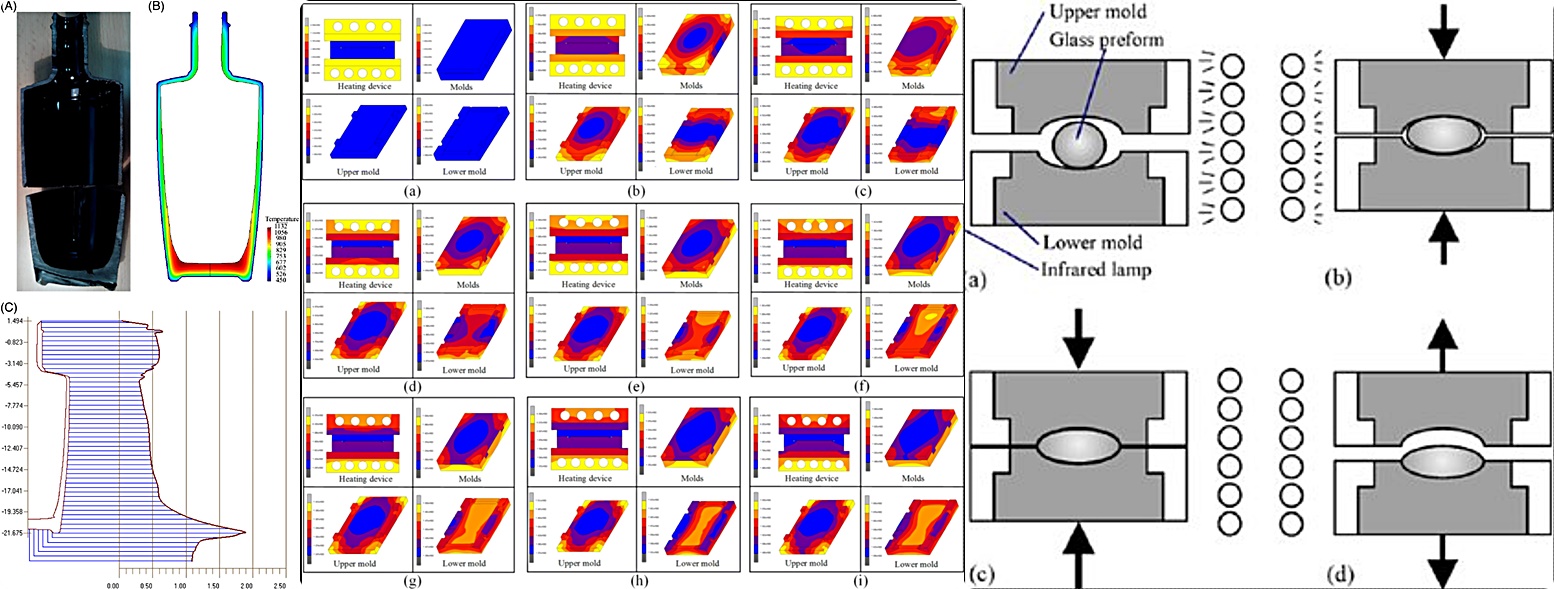
Heat transfer between molten glass and mold governs:
-
cooling rate
-
viscosity gradient
-
surface replication accuracy
-
internal stress formation
Thermal imbalance causes:
-
differential shrinkage
-
surface waviness
-
mold mark visibility
Modern mold design relies on thermal simulation to ensure uniform cooling.
Annealing Curve and Stress Relaxation

After forming, glass retains internal stress due to uneven cooling.
Annealing removes this stress through controlled temperature reduction:
1 reheating to stress relief zone
2 controlled cooling gradient
3 stabilization to ambient temperature
Improper annealing leads to:
-
micro-cracking
-
surface distortion
-
delayed fracture
Stress-free structure is essential for smooth, stable glass surfaces.
Glass Bottle Defect Classification Atlas
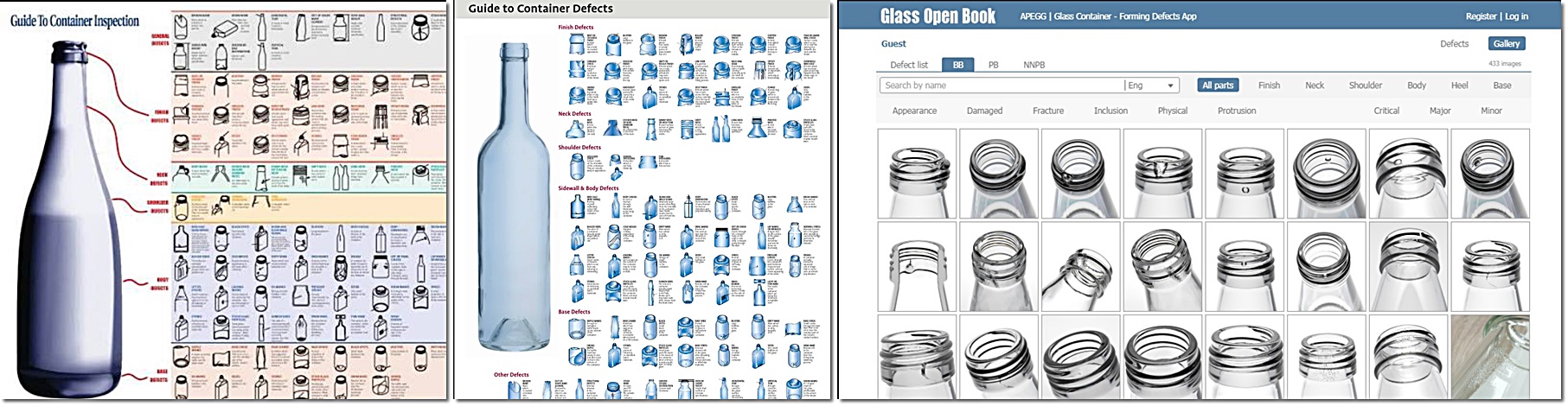
Glass defects originate from thermal, mechanical, or material instability.
Major categories:
Forming defects
-
wrinkles
-
folds
-
thickness variation
Material defects
-
bubbles
-
inclusions
-
unmelted particles
Mold interaction defects
-
rough surface
-
seam misalignment
-
scuffing
Stress defects
-
micro-cracks
-
burst zones
Each defect type corresponds to a specific process failure.
Microscopic Structure of Surface Irregularities

Under magnification, surface defects reveal structural features invisible to the naked eye.
Microscopic analysis identifies:
-
stress concentration patterns
-
crystallization zones
-
inclusion boundaries
-
surface fracture initiation points
This allows engineers to trace defects back to specific process stages.
Automated Optical Inspection Systems
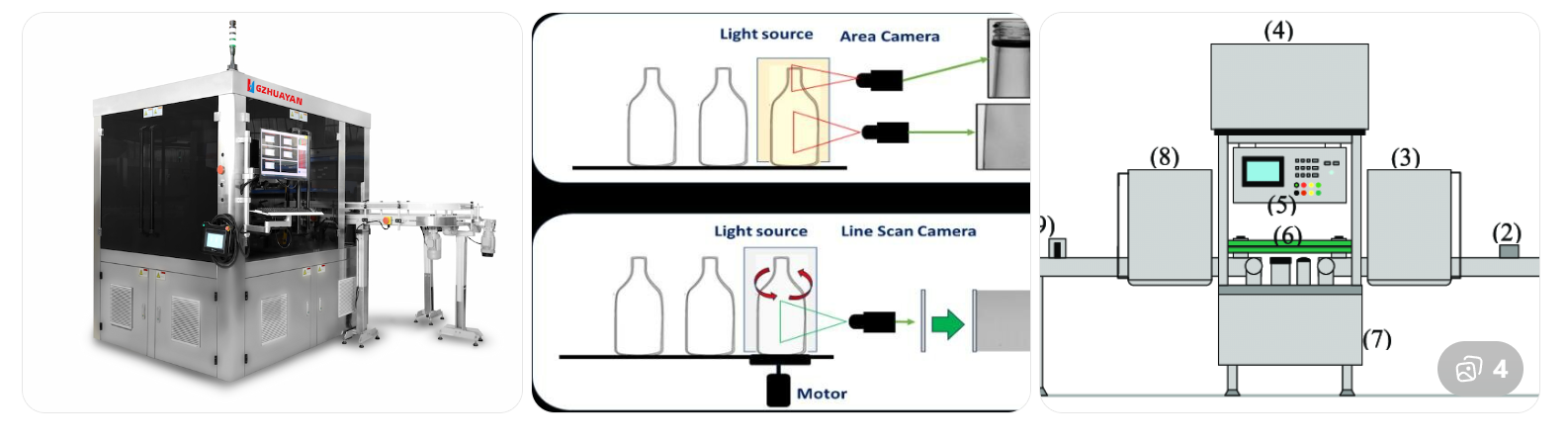
Modern production lines use high-speed vision inspection to ensure quality consistency.
Inspection systems detect:
-
dimensional deviation
-
surface defects
-
inclusions
-
finish defects
-
stress fractures
Real-time rejection prevents defective containers from reaching filling lines.
Why Surface Smoothness Matters for Industrial Packaging
Surface quality directly affects downstream operations:
-
labeling precision
-
sealing performance
-
mechanical durability
-
transport reliability
-
product appearance
Smooth surfaces indicate stable manufacturing and predictable performance.
Integrated Process Control in Modern Glass Manufacturing
Surface smoothness is not controlled by a single parameter but by system integration across:
-
furnace thermal stability
-
gob delivery precision
-
forming synchronization
-
mold heat transfer
-
annealing control
-
inspection accuracy
Industrial glass quality is therefore an outcome of process stability engineering.
How Xuzhou Colors Glass Ensures Surface Quality Stability
Xuzhou Colors Glass applies integrated manufacturing control to ensure consistent container performance:
-
precision gob weight and temperature control
-
advanced mold material and maintenance
-
stable furnace melting conditions
-
optimized forming machine synchronization
-
controlled annealing profiles
-
full optical inspection systems
This system-level control ensures smooth surfaces, dimensional consistency, and high structural reliability.
Final Engineering Perspective
Glass bottle surface smoothness is a measurable outcome of process stability across the entire manufacturing chain.
When thermal, mechanical, and material variables are precisely controlled, manufacturers achieve:
-
uniform surface finish
-
structural integrity
-
optical clarity
-
reliable packaging performance
For modern food and beverage packaging, smooth glass is not simply visual quality — it is a direct indicator of engineering precision.